A reading journal needs only one page to be useful: a running log of what you finished and when. Every other page is optional, and the ones worth adding are those you will still fill in six months from now. This guide goes through seven pages, what each one records, and how to keep the whole thing light enough that it does not turn into homework.
Start With the Notebook and One Pen
Any notebook works. A5 size, 148 x 210 mm or about 5.8 x 8.3 inches, is the usual choice because it fits in a bag next to a book. Dot grid paper makes it easy to draw tables and boxes without a ruler. Lined paper is fine if you mostly write.
If you plan to use markers or highlighters, look for heavier paper. Ordinary notebook paper is around 80 gsm; Leuchtturm1917, for example, lists 80 to 100 gsm for its classic notebooks. Pages that thin show the ink from the other side, and a page of ratings is hard to read through the ghost of last month's list. Notebooks made for markers go much heavier, up to the 160 gsm that Archer & Olive uses.
Leave the first two pages blank for an index. Number the pages as you go, and note where each tracker lives. A journal you cannot find things in stops being used.
The Books-Read Log
This is the spine of the journal. Give it a spread near the front and draw a simple table.
| Column | What to write | Why it earns its place |
|---|---|---|
| Number | A running count | Shows your yearly total at a glance |
| Title and author | As printed on the cover | The record itself |
| Date finished | Month and day | Lets you see slow and fast seasons |
| Format | Print, e-book or audio | Shows how you really read |
| Genre | One or two words | Reveals habits you did not notice |
| Rating | Stars or a number | A quick answer when someone asks for a recommendation |
Leave room for the year. An A5 page ruled at college-rule spacing (9/32 inch, about 7 mm) holds roughly 25 rows under a heading, so one spread takes about 50 books.
Fill in the row on the day you finish. It takes one minute, and it is the only habit the journal depends on.
Add a line for books you stopped reading. A short "did not finish" list, with a few words on why, is as useful as the finished list. It tells you what to stop picking up.

Ratings That Still Mean Something in December
Five stars is the common scale, and its weakness is that everything drifts toward four. Fix that by writing down, once, what each star means to you. For example: five is a book you would reread and press on friends, three is a book you enjoyed and will forget, one is a book you finished out of stubbornness.
Half stars are worth allowing. Most arguments with yourself happen between three and four.
Some readers skip a single score and rate a few things separately, such as characters, plot, writing and plain enjoyment, then average them. That takes longer, but it explains why a beautifully written book you did not enjoy landed where it did.
A Quotes Page
Keep one section for lines you want to find again. Write the quote, the title and the page number. The page number is what makes it usable later.
Copying by hand is slow, and that is the point: you only copy the lines that are worth it. If you read on a train or in bed, mark the spot with a sticky flag and copy it out when you update your log.
Leave a blank line between entries. A quotes page crammed margin to margin is unpleasant to reread.
To-Be-Read List and Series Tracker
The to-be-read list. A plain list of titles you mean to get to, with a column for who recommended each one. That column matters more than it looks, because it tells you who to thank or blame. Keep the list to one page. When it is full, cross something off before adding a new title, or the list becomes a monument to guilt.
The series tracker. For each series, write its name and draw a row of numbered boxes, one per book. Color or tick a box when you finish that volume. Add the publication order if it differs from the reading order. This page answers the question you would otherwise look up every time: which one is next?
The Monthly Wrap-Up
At the end of each month, use half a page for a summary. Five lines are enough.
- Books finished this month
- Pages read, or hours listened
- Favorite of the month
- One that disappointed
- What you plan to read next
The wrap-up is where patterns show up. Three months of low numbers during a busy season is information, not failure. A year of wrap-ups is also the easiest way to choose your favorites in December.
The Bookshelf Tracker
This is the page people photograph. Draw two or three shelves across a spread and fill them with blank book spines of different heights and widths. Each time you finish a book, write its title on a spine and color it in.
Draw the empty spines in pencil first, ten or twelve per shelf, so you can add more if the year goes well. Color by rating or by genre and the finished shelf becomes a chart: a row of mostly blue spines means a year of mysteries.
It duplicates the log, and that is fine. The log is for looking things up. The shelf is for the pleasure of watching it fill.
Minimal or Decorated
A minimal journal is black pen on plain paper: the log, a to-be-read list and a quotes section. It takes a minute per book and survives a busy year.
A decorated journal adds hand-lettered headers, color and a little washi tape along the page edges. It is slower and more fun to open. The risk is setting a standard on page one that you cannot keep up in March.
A middle path works for most people. Decorate the pages you set up once, like the title page and the bookshelf. Keep the pages you fill in weekly as plain as possible.
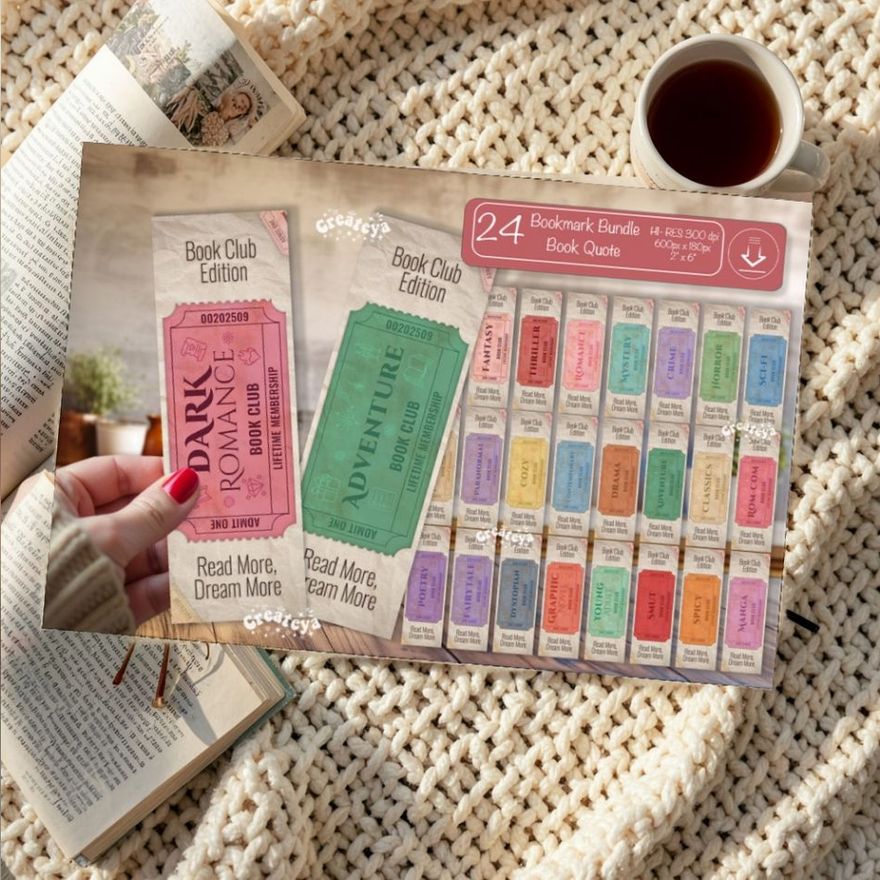
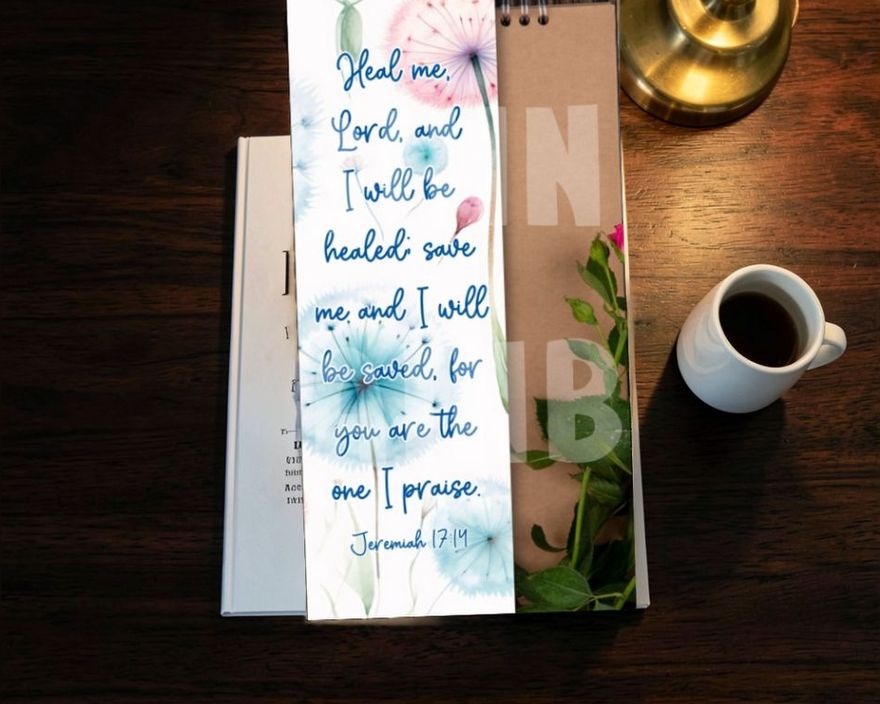
One practical addition either way: keep a bookmark in the journal itself, at the log page, so it opens where you need it. A bookmark that looks like it belongs to a reader suits the job, and the names of these three from the aesthetic bookmarks collection say as much.

Book Junkie Pink Doodle Bookmarks
See the listing ↗
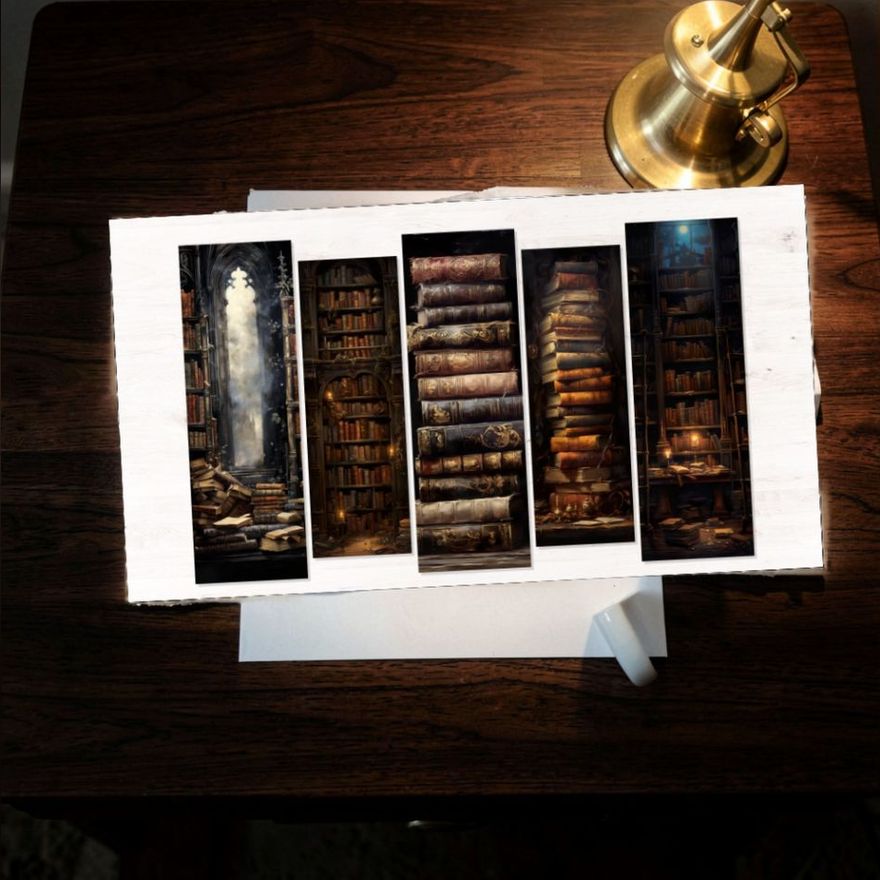
Dark Academia Printable Bookmark
See the listing ↗
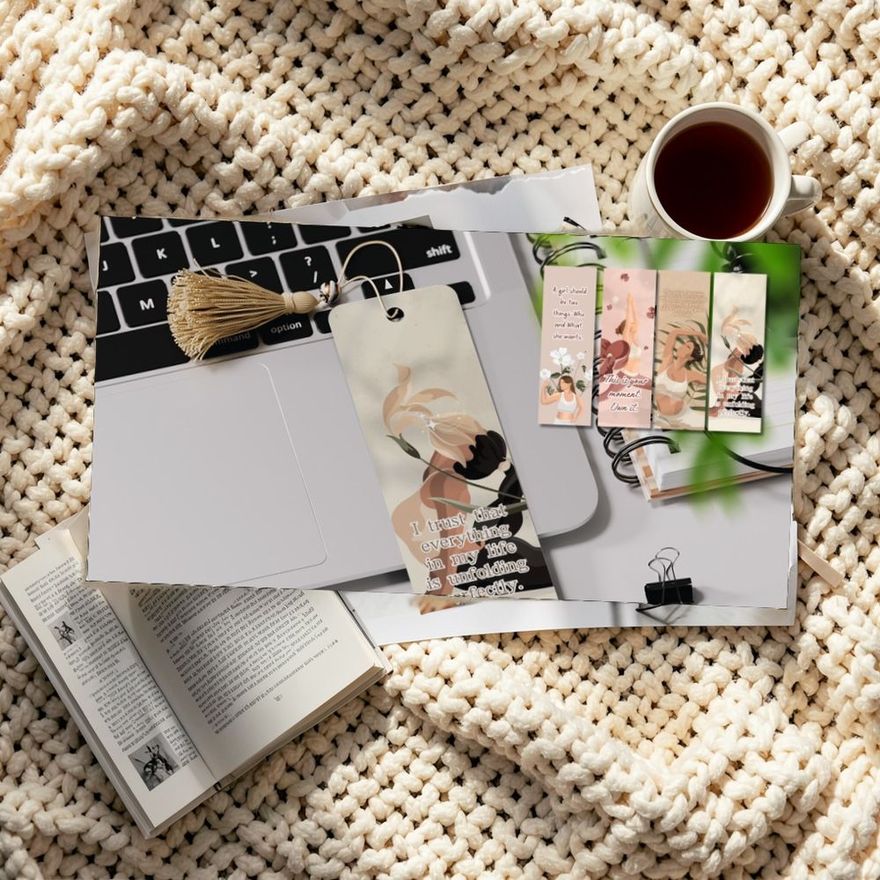
Affirmation Quote Bookmarks in Neutral Boho
See the listing ↗From the collection Aesthetic Bookmarks. New Creative Fabrica members get 10 free downloads, and any of these can be one of them.
A second bookmark in your current book, printed on plain cardstock and left unlaminated, can serve as a scratch pad for page numbers of quotes until you sit down with the journal.
Notebook, Pen and a Few Extras
A dotted A5 notebook and one black pen are the whole kit for a minimal journal. Washi tape and sticky tabs are the optional layer, for decorated pages and for finding a tracker quickly.
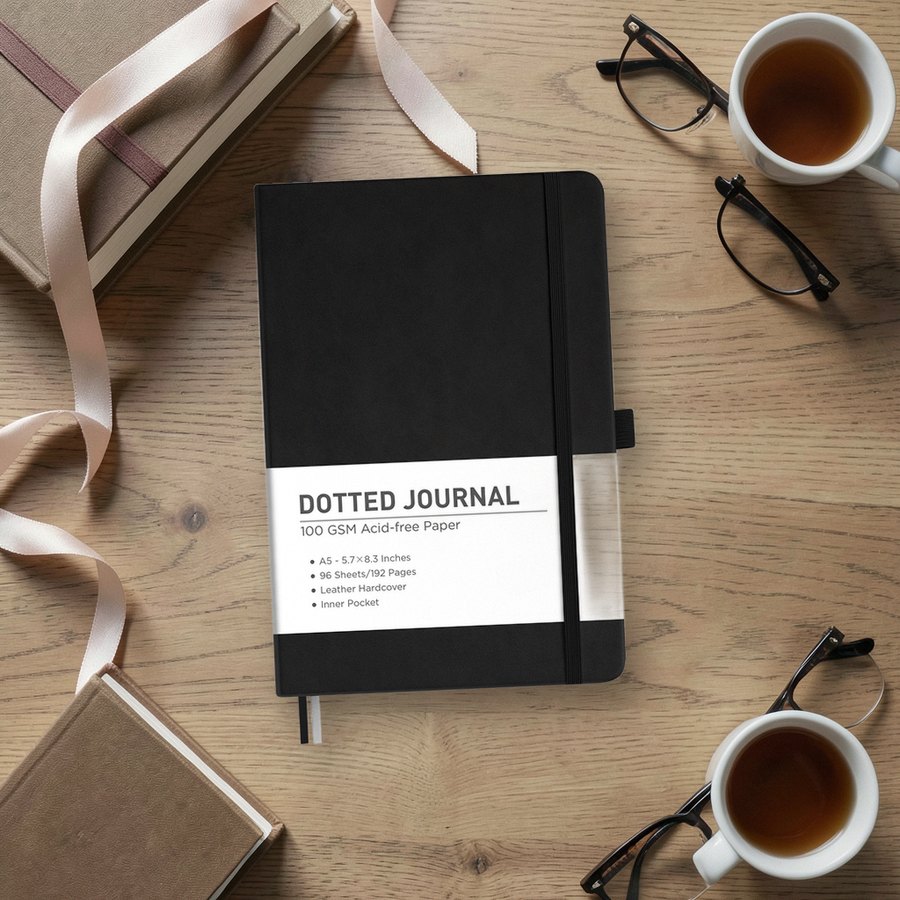 Dotted A5 journal notebookRETTACYSee it on Amazon
 Black pigment fineliners, assorted pointsSAKURASee it on Amazon
 Floral washi tape, 21 rollsMr. PenSee it on Amazon
 Pastel sticky index tabsMr. PenSee it on Amazon
As an Amazon Associate we earn from qualifying purchases.
Set It Up in One Evening
Do not build every page tonight. Draw the log table, write the heading for the to-be-read list, and number the pages. Enter the book you are reading now as row one.
Add the other pages when you feel the need for them. A series tracker makes sense the day you start a series, and not before.
If you want a goal to give the journal some shape, reading challenge ideas for the year lays out several kinds, from simple number goals to genre bingo. And if the journal is for someone else, it pairs well with a handmade bookmark: see gifts for book lovers for how to put the two together.
Bookmark Collections for This Topic
 Aesthetic Bookmarks6 hand-picked · open the collection →
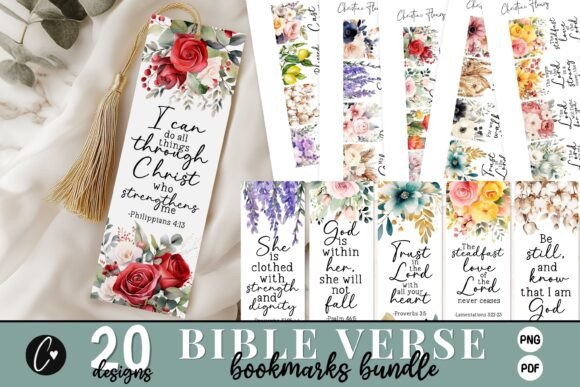 Bookmark Sets & Bundles11 hand-picked · open the collection →